Key points
- Four quarts make a gallon, and NIST puts the liquid quart at 57.75 cubic inches and the gallon at 231.
- Two bins with nearly the same quarts can have very different shapes, so the outside size decides the fit.
- Measure depth, width and height of the space, then leave room for your hand and for the lid to open.
- Our underbed bins with a printed size stand 6 to 6.12 inches tall with the lid on, so clearance under the frame comes first.
Measure the space before you read the label
A capacity figure sounds like the answer. Sixty quarts feels big and twelve feels small, but neither number says whether a bin slides onto the shelf above your washer or under the bed in the guest room. Those answers come from a tape measure, and they take two minutes.
So take three measurements of the spot first. Depth runs from front to back, width from side to side, and height up to the next shelf, the closet rod or the bed frame. Write them down in inches. Then open our clear storage bins and hold those numbers against the outside size on each card. Quarts come last, as the tiebreaker between bins that already fit.
How quarts, gallons and cubic inches relate
The National Institute of Standards and Technology keeps the tables behind these units in its Handbook 44. In the table of liquid volume, 2 pints make 1 quart of 57.75 cubic inches, and 4 quarts make 1 gallon of 231 cubic inches. A cubic foot is 1,728 cubic inches. Those three facts are all the arithmetic a bin label needs.
Every capacity in our catalog follows the four-to-one rule. A 28-quart Snaplock bin is a 7-gallon bin, and the 60-quart underbed bin is a 15-gallon one. To turn quarts into cubic inches, multiply by 57.75, so 28 quarts come to 1,617 cubic inches. Gallons turn into cubic feet with the factor NIST prints, 0.1336806, and 15 gallons come out at almost exactly 2 cubic feet.
Handbook 44 also keeps a dry quart of 67.2006 cubic inches as a separate unit, and it asks for the word liquid or dry whenever the two need telling apart. For metric, the same tables give the liquid quart as 946.3529 milliliters and the gallon as 3.785411784 liters. On its metric conversion card, NIST rounds those to 0.95 and 3.79, close enough when all you want to know is that a 7-gallon bin holds about 26.5 liters.
| Unit | Equals | Cubic inches | Metric |
|---|---|---|---|
| Liquid quart | 2 pints | 57.75 | 946.3529 milliliters, about 0.95 liter |
| Gallon | 4 quarts | 231 | 3.785411784 liters, about 3.79 liters |
| Cubic foot | 1,728 cubic inches | 1,728 | About 0.03 cubic meter |
Same quarts, different boxes
Capacity is volume, and volume hides shape. Our Snaplock 28 Qt bin measures about 23.5 by 16.125 inches and stands 6 inches tall. The Secure Latch 31-quart bin holds three quarts more, yet it is a nearly square box of 16.25 by 13 inches, 12.13 inches high. One slides under a bed. The other suits a closet shelf where depth is short and height is plentiful.
Footprints repeat across sizes, too. The 56-quart Snaplock bin shares the 23.5 by 16.125 inch footprint of the 28-quart one and doubles the height to about 12.25 inches with the lid on. On a shelf with 13 inches of headroom, both fit. A shelf with 8 inches takes only the shallow bin, even though the quart numbers make the bigger one look like the better choice.
Length plays the same trick. At 41 quarts, the Snaplock large bin runs 34.38 inches end to end and stays 6 inches tall, a shape made for a row of shoes on a closet floor. A bin that long rules out any cabinet narrower than about 35 inches before capacity even comes up.
Measuring a shelf or a closet
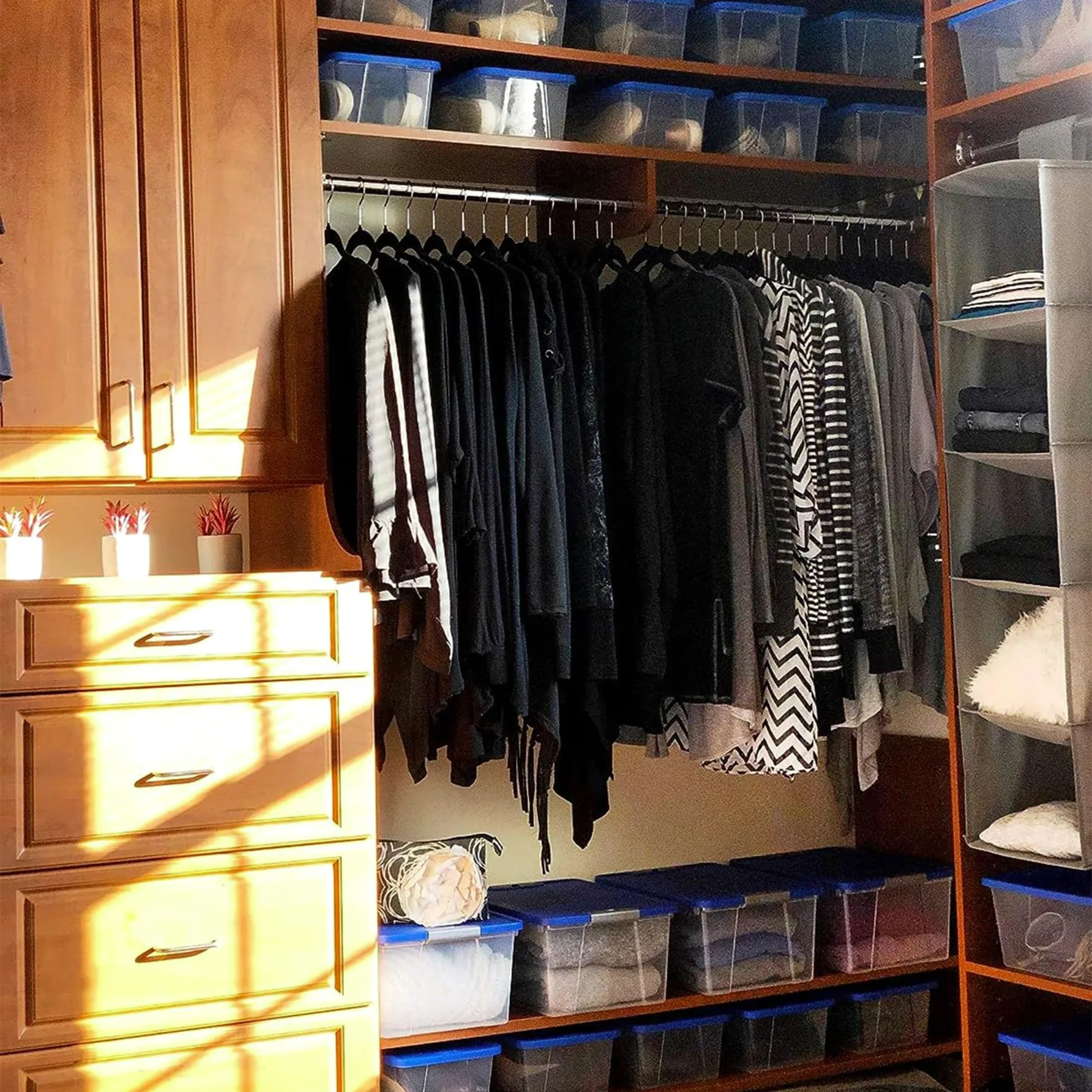
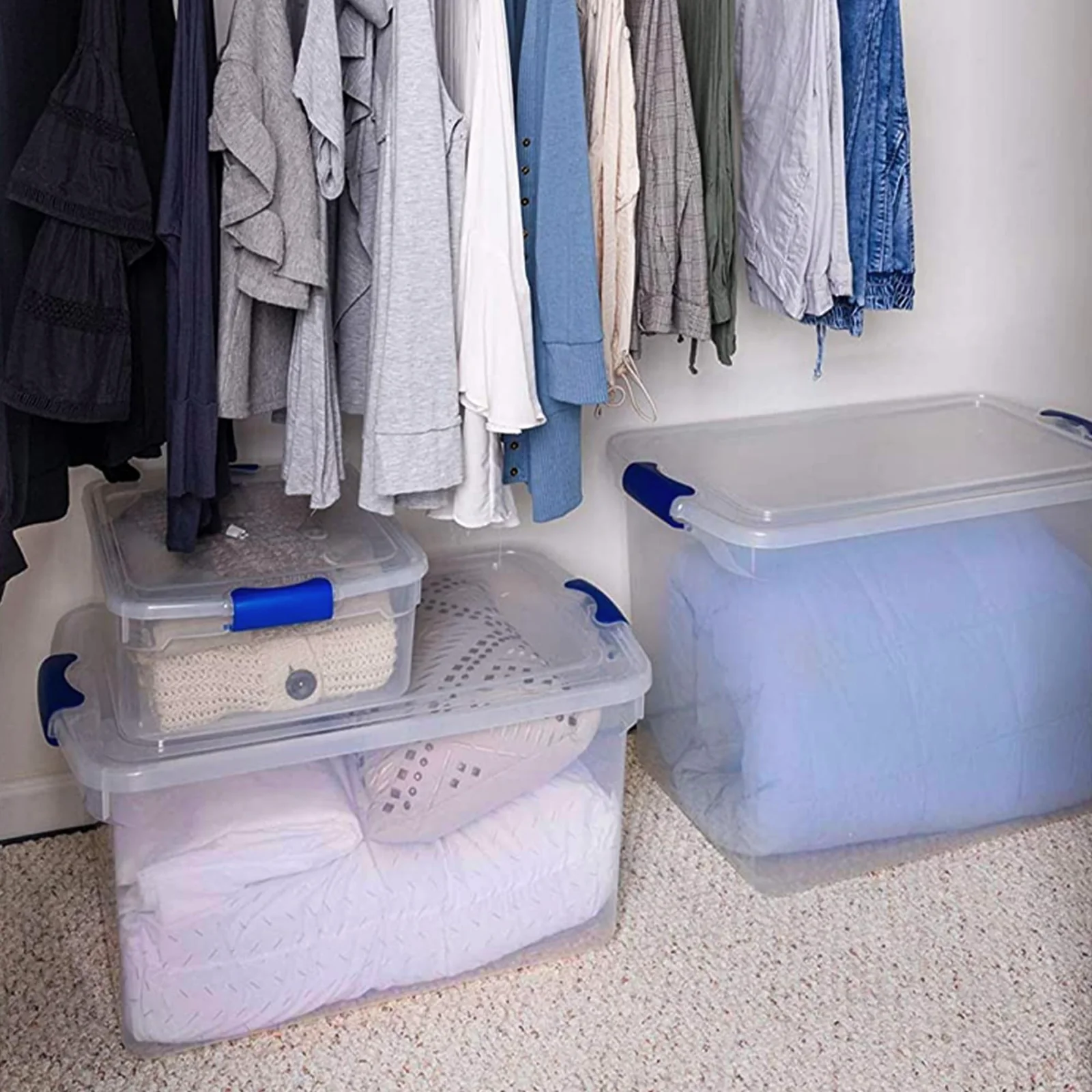
Shelves are where a bin gets judged by its outside size. Measure the depth from the back wall to the front edge, the clear width between uprights or brackets, and the height to the shelf above. In a closet with a door, take the depth to the inside of the closed door rather than the edge of the shelf.
Leave room for your hand. Latching handles snap down over the lid, and a hinged lid needs space to swing up before anything comes out. Some of our cards give the size with the lid on, such as the Snaplock 12 Qt at about 16.25 by 11 by 5.62 inches. Where a card does not say, allow a finger's width above the lid before you count on a fit.
Width adds up faster than it seems. Our 66-quart latching bin is 16.5 inches wide, so two side by side need 33 inches, a little under a yard. Walls and handles take room as well: the 15-gallon Durabilt flip-lid tote is about 26 inches long outside and about 21.06 inches inside. And read the card for the exact pack you want. Most packs of the 64-quart Secure Latch bin measure 23.5 by 16.12 by 13.5 inches, while some give 28.75 by 16 by 10.63.
- Depth: from the back wall to the front edge, or to the inside of a door that has to close.
- Width: between uprights, brackets or the door frame, whichever is narrowest.
- Height: up to the next shelf, the closet rod or the bed frame, with room to lift the lid.
- Count: divide the width by the bin width to see how many sit side by side.
Under the bed
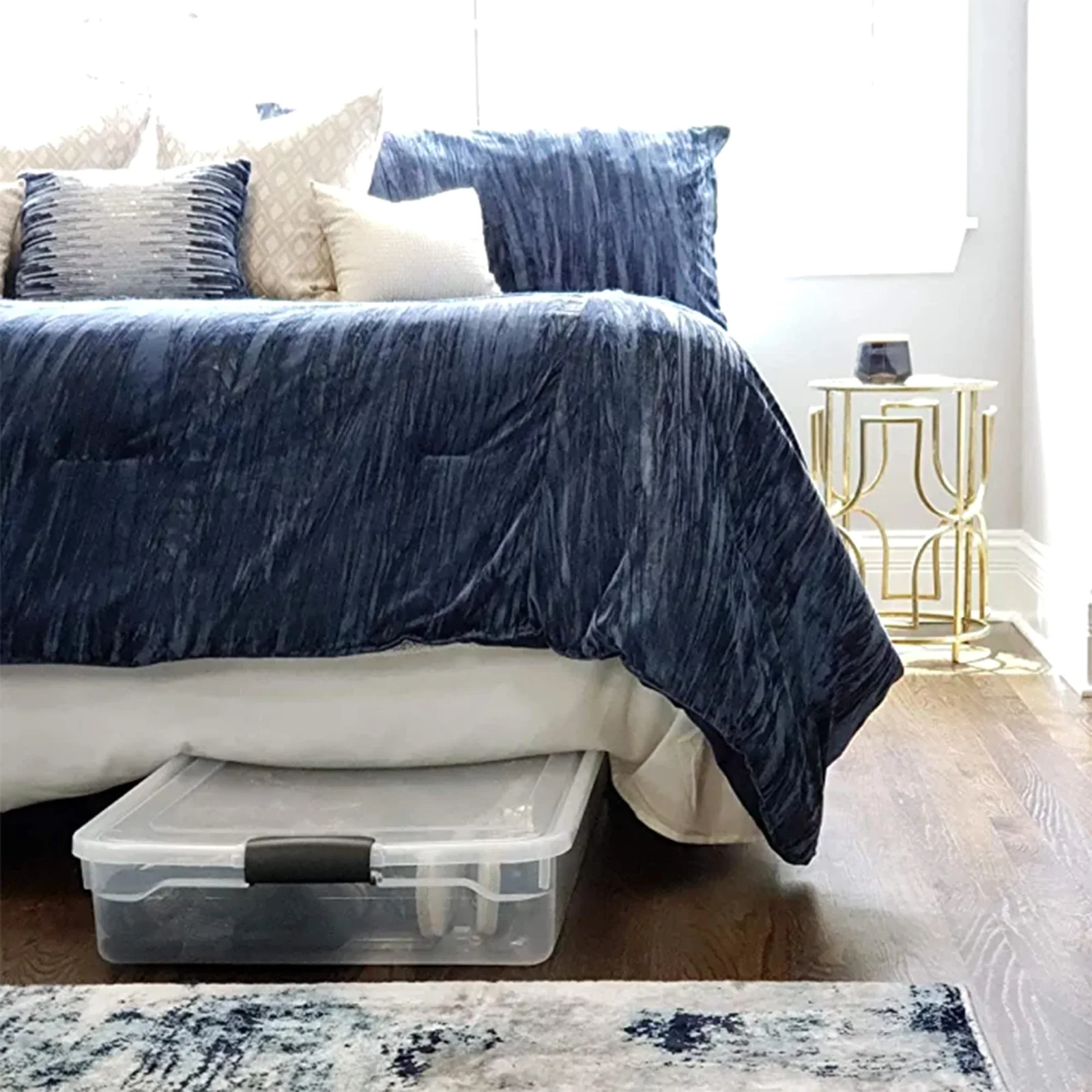
The space under a bed is easy to waste and awkward to measure, because you have to get down on the floor to do it. Measure from the floor to the lowest part of the frame, a side rail or a slat, at the spot where the bin will slide in. A bed skirt or a center support can steal an inch or block a whole side.
Every one of them stays near 6 inches with the lid in place. At 30 by 24 inches, the Secure Latch 56-quart bin has a wide shape that suits the side of a full or queen bed. The Secure Latch 60 Qt underbed bin runs 40 by 20 inches and follows the length of the frame instead. On the underbed storage shelf you can set the two side by side and compare the numbers on each card.
Blankets and folded linens lie flat in a bin this shallow. Latches hold the lid as the bin slides out across the floor, and the clear sides show which bin holds the winter sheets before you pull it.
Our bins and totes by capacity
The rows run from the smallest clear bin to the largest heavy-duty tote, with gallons worked out by the four-to-one rule and the outside size as each card gives it. Hold the last column against your tape measure. Where two bins sit close in quarts, shape is what decides.
| Bin or tote | Quarts | Gallons | Outside size (inches) |
|---|---|---|---|
| Snaplock 6 Qt | 6 | 1.5 | 13.62 x 8.25 x 4.75 |
| Snaplock 12 Qt | 12 | 3 | 16.25 x 11 x 5.62 with lid |
| Secure Latch 15.5 Qt | 15.5 | 3.88 | 12.73 x 11.72 x 5.6 |
| Snaplock 28 Qt | 28 | 7 | 23.5 x 16.125 x 6 |
| Secure Latch 31 Qt | 31 | 7.75 | 16.25 x 13 x 12.13 |
| Snaplock 41 Qt | 41 | 10.25 | 34.38 x 15.5 x 6 |
| Secure Latch 56 Qt underbed | 56 | 14 | 30 x 24 x 6.12 |
| Snaplock 56 Qt | 56 | 14 | 23.5 x 16.125 x 12.25 with lid |
| Secure Latch 60 Qt underbed | 60 | 15 | 40 x 20 x 6.12 |
| Secure Latch 64 Qt | 64 | 16 | 23.5 x 16.12 x 13.5 on most packs |
| Secure Latch 66 Qt | 66 | 16.5 | 26.5 x 16.5 x 12.75 |
| Durabilt 18 Gallon | 72 | 18 | 22.5 x 17.5 x 16.5 |
| 20 Gallon Latching Tote | 80 | 20 | 24 x 17.5 x 17.5 |
| Durabilt 27 Gallon | 108 | 27 | 30.75 x 20.50 x 14.38 |
| 30 Gallon Latching Tote | 120 | 30 | 32 x 19 x 17.18 |
| Durabilt 34 Gallon | 136 | 34 | 32.5 x 18.5 x 16.75 |
Matching the size to what you store
Small things want small boxes. A 6-quart clear tote, about 13.6 by 8.2 inches, holds craft supplies or desk odds and ends without burying one under another. The 15.5-quart Secure Latch bin stands 5.6 inches tall, so accessories lie close to a single layer and stay visible through the sides. For art supplies that travel from the closet to the table, the 7.5-quart Secure Latch bin keeps its lid on through the trip, because you carry it by the same handles that lock it.
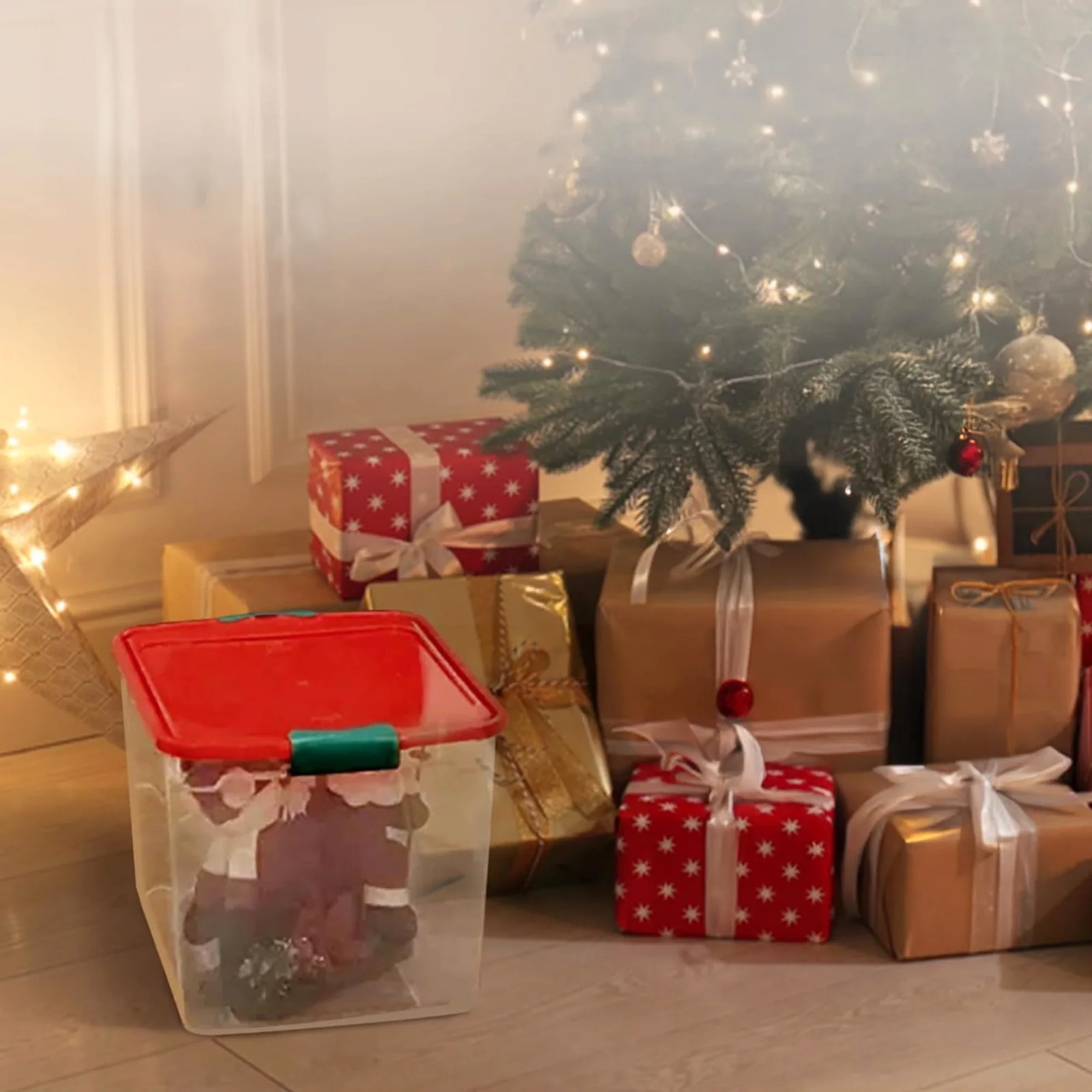
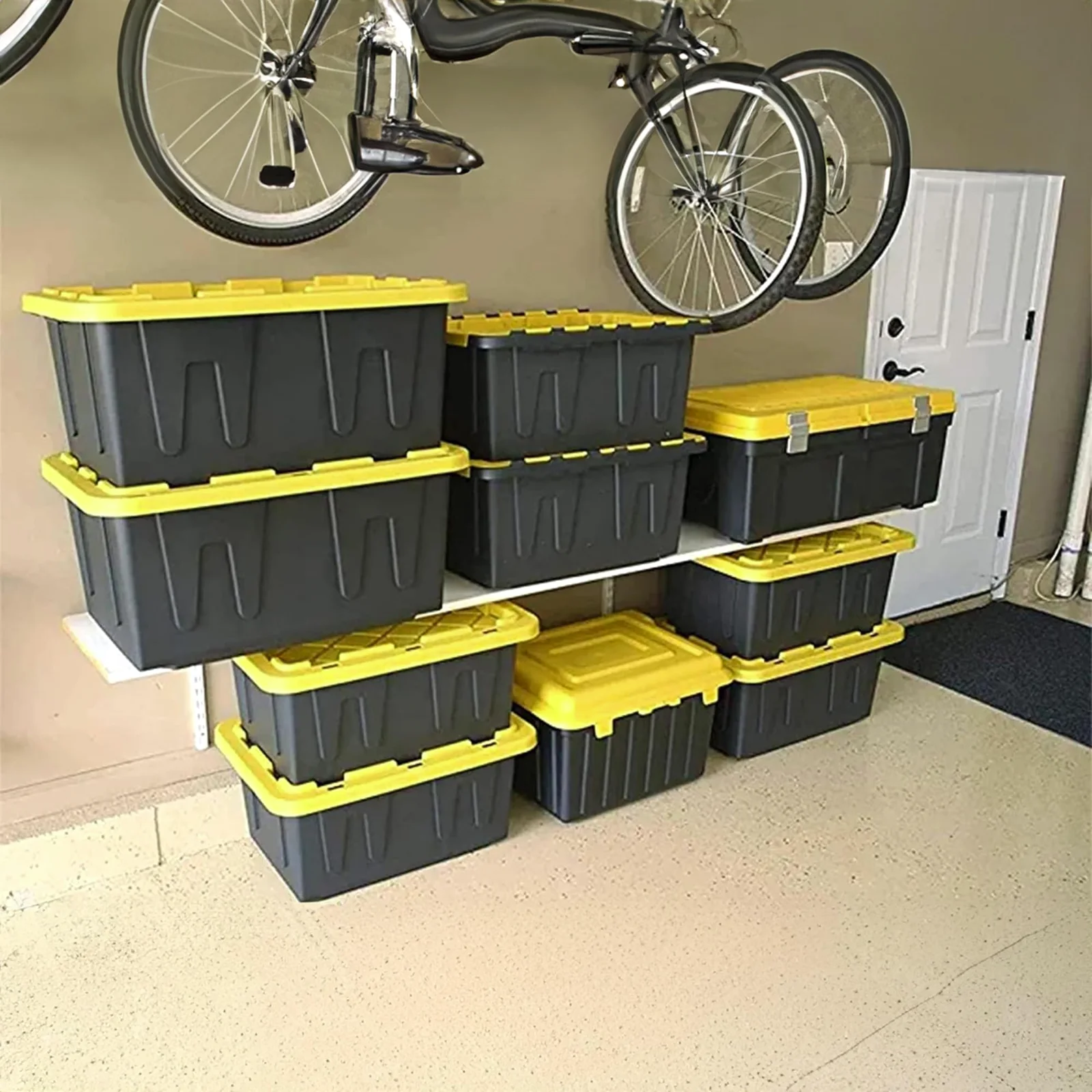
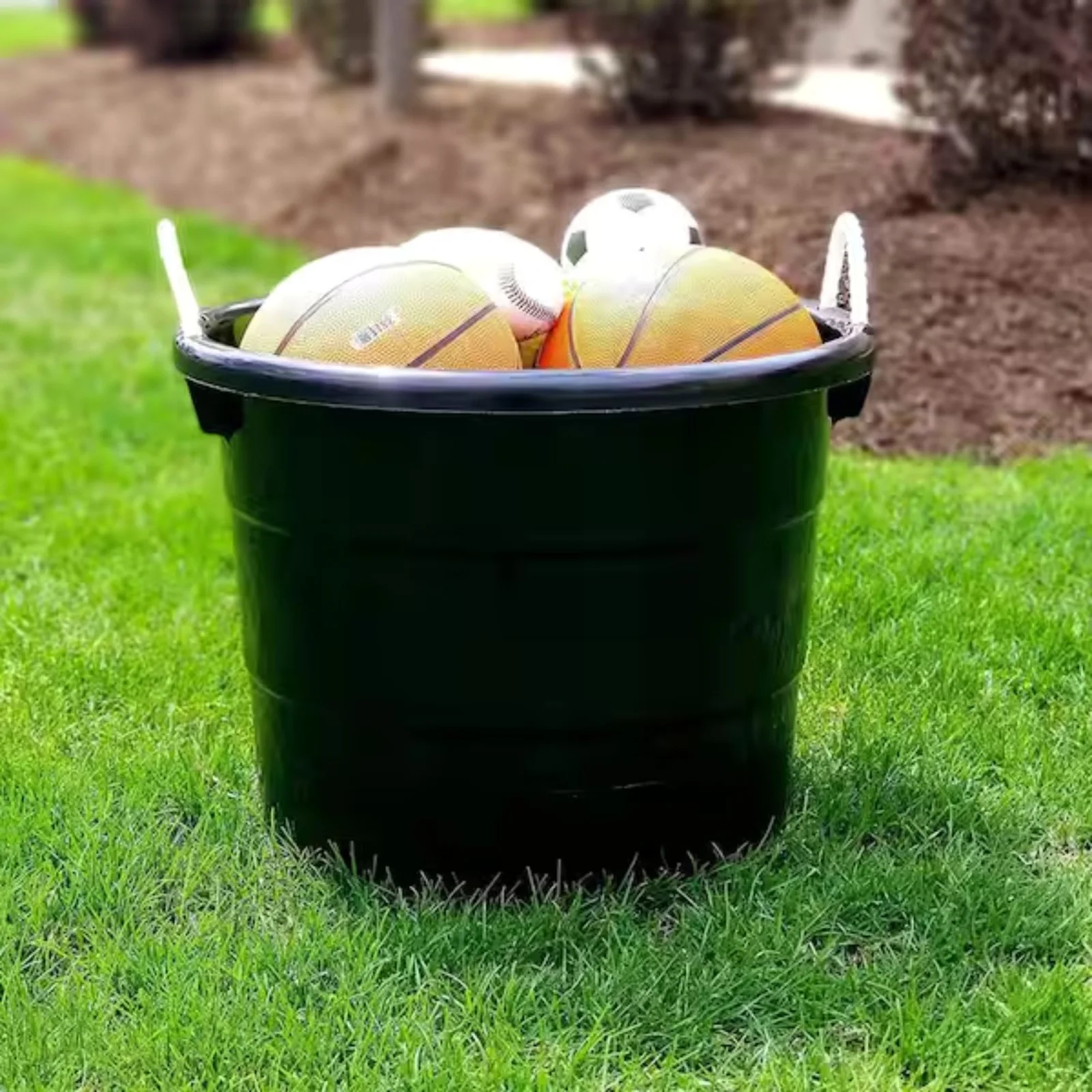
Bulk wants depth. Folded sweaters and books fill the 31-quart bin, blankets and boots suit the 56-quart Snaplock, and a season of decorations goes into the 64-quart latching bin. Camping gear, tools and sports equipment move up to the gallon sizes of our heavy-duty totes, and the guide to garage storage covers what belongs in them and what stays out.
Weight is the last check. A full large bin gets heavy, so pack dense things like files at the bottom, lighter clothing on top, and keep the stack low. If lifting a bin onto a shelf at chest height is a struggle, two smaller bins would serve that spot better than one big one.
Every bin named here is part of the HOMZ range.